.svg)


.svg)
Scroll through men's health content online, and you'll encounter alarming claims: the receipt the cashier handed you is tanking your testosterone, your cologne is flooding your body with xenoestrogens, and every plastic bottle is quietly destroying your hormonal health. Wellness influencers have made going "toxin-free" a cornerstone of masculine health, and the warnings keep getting louder.

But how much of this is grounded in real science? Environmental hormone disruptors are a legitimate area of research with real evidence behind some concerns. At the same time, many popular claims wildly overstate what everyday exposures actually do to your testosterone. Understanding what the research shows and where the science is still developing is the best way to make smart decisions without unnecessary anxiety.
What Are Endocrine Disruptors?
Your endocrine system is your body's hormonal communication network, controlling everything from energy to sex drive to muscle growth. Endocrine-disrupting chemicals (EDCs), also known as environmental hormone disruptors, interfere with the endocrine system by mimicking hormones like estrogen, blocking the receptors where natural hormones attach to cells, or altering the processes by which hormones are produced and metabolized.
"Xenoestrogens" and "environmental estrogens" are terms for chemicals that act like estrogen in the body. Because men rely on a careful balance between testosterone and estrogen, anything that pushes estrogen activity higher can, in theory, affect testosterone. That phrase "in theory" is where this conversation most often goes wrong. Something being capable of disrupting hormones in a lab and actually doing meaningful harm at normal, everyday exposure levels are two very different things.
Does BPA Lower Testosterone?
BPA was originally developed as a synthetic estrogen in the 1930s before being widely used in hard plastics and food can liners. Research shows that BPA can interfere with the cells in the testicles responsible for making testosterone, slowing down or blocking several steps in the production process. Animal studies have consistently confirmed this effect.
Human research is more complicated. BPA has been detected in the urine of roughly 93% of Americans, but studies looking for a clear connection between BPA levels and lower testosterone in people have produced mixed results. The FDA considers BPA safe at typical exposure levels, while many public health researchers argue that small exposures, building up from multiple sources over time, warrant more concern.
Do Receipts Lower Testosterone?
Most paper receipts are printed on thermal paper coated with BPA or its replacement, BPS (bisphenol S). Because these chemicals sit loosely on the paper's surface, they rub off onto skin easily. Research published in PLOS ONE found that holding a receipt for 90 minutes after using hand sanitizer caused a measurable rise in BPA levels in participants' blood. Hand sanitizer breaks down the skin's natural barrier and can increase absorption by up to 100 times. A recent Ecology Center study found that 80% of receipts from major U.S. retailers still contain bisphenols.

The concern is real, but brief and casual receipt handling is not producing the kind of sustained exposure that drives testosterone changes in research. The people with the most legitimate concern are cashiers and retail workers handling receipts repeatedly all day. For everyone else: skip the printed receipt when you can, opt for digital, and avoid handling receipts right after applying hand sanitizer or lotion.
Phthalates Lower Testosterone: What the Evidence Shows
Phthalates (pronounced THAL-ates) are chemicals used to make plastics soft and flexible, and to help fragrances last longer. They show up in personal care products, vinyl, food packaging, and more, which is why they consistently appear at the center of conversations about hormone disruptors in skincare.
What the Population Studies Found
The human evidence here is stronger than for BPA. A national study examining over 2,200 Americans found that higher phthalate levels in urine were linked to lower testosterone across multiple age groups. In men between 40 and 60, higher exposure to one common phthalate was linked to about 7.7 percent lower total testosterone. A study published in Human Reproduction connected phthalate exposure to reduced testosterone and reduced function in the cells that make it.
How Phthalates Interfere With Testosterone Production
Phthalates work against testosterone in two ways: slowing down how much the body produces, and blocking testosterone from doing its job in your tissues, even when blood levels look normal on a test. The evidence is strong enough that regulators have responded. The European Union has restricted several phthalates in consumer products, and the U.S. has banned certain phthalates in children's products.
Do Microplastics Lower Testosterone?
Microplastics are tiny plastic particles that form when larger plastics break down over time. A 2023 study confirmed microplastics inside human testicular tissue, meaning these particles can travel through the bloodstream and build up in the testicles. Multiple animal studies have shown that long-term microplastic exposure reduces testosterone, lowers sperm quality, and disrupts the cells that make testosterone. Some types also appear to bind directly to testosterone molecules, reducing the amount available to the body.
Human studies confirming this in people are still limited, so a direct cause-and-effect link has not been firmly established. However, given that the average person consumes an estimated 0.1 to 5 grams of microplastics per week through food and water alone, this is an area of active and urgent research.
Hormone Disruptors in Skincare and Fragrance
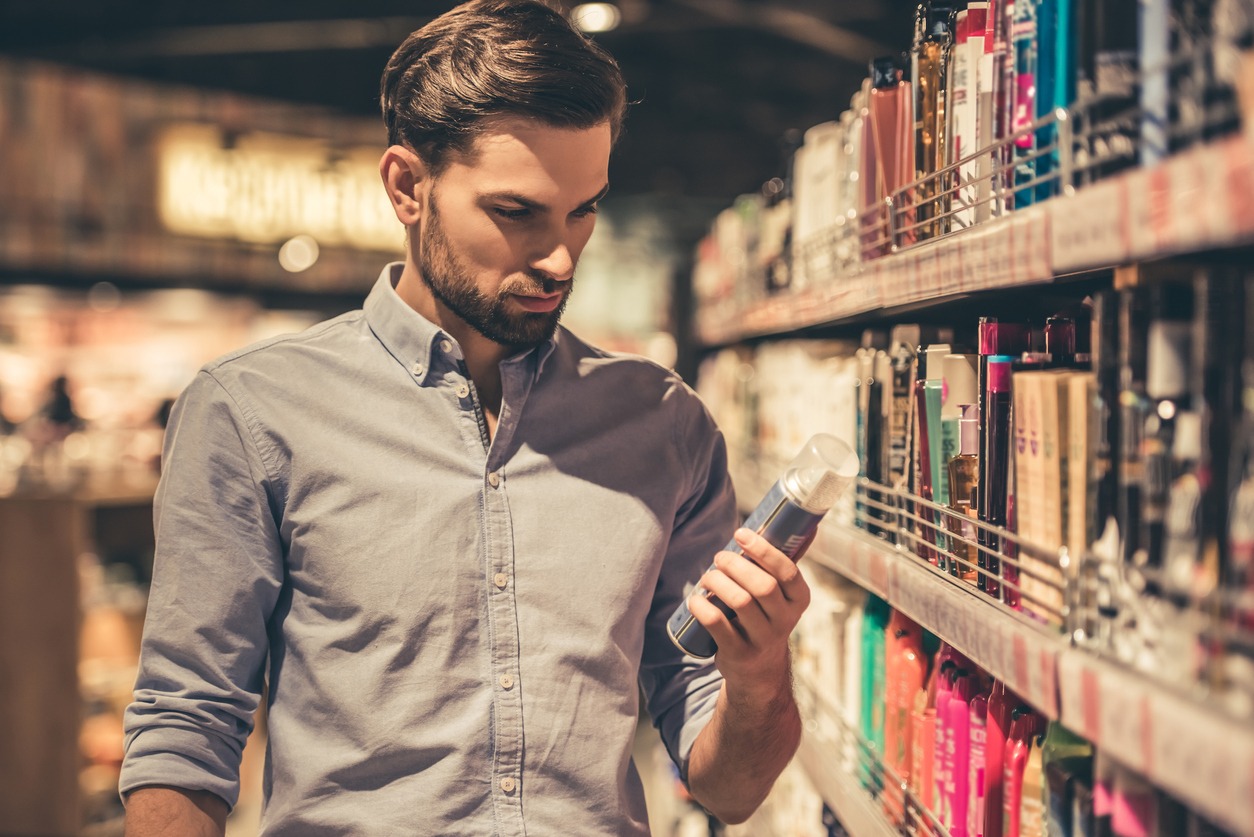
Synthetic fragrances are added to shampoos, deodorants, lotions, detergents, and cleaning products, meaning daily exposure adds up quickly across many products at once.
The Problem With "Fragrance" on a Label
In the United States, companies are not required to list every chemical that makes up a fragrance blend. That single word on a label can represent hundreds of different compounds, including phthalates used to make a scent last longer. A European analysis of 20 popular designer perfumes found chemicals of concern in all 20 products tested. Parabens, a common preservative in lotions and shampoos, weakly mimic estrogen and have been linked to measurable hormonal effects in adults.
How to Choose Products That Minimize Exposure
Look for products labeled "fragrance-free" rather than "unscented." Unscented products can still contain chemical masking agents. Seek out paraben-free and phthalate-free labeling, and cut back on the total number of fragranced products you use each day. Exposure to multiple hormone-disrupting chemicals at once can add up to a bigger combined effect than any single product alone.
Your Next Steps
Reducing your exposure to hormone-disrupting chemicals is sensible, but it works best as one part of a larger picture. Excess body weight, poor sleep, physical inactivity, and chronic stress all have a significant, well-documented impact on testosterone, often greater than what environmental chemicals can be blamed for at typical exposure levels.
Start with the easy wins: skip holding onto printed receipts, choose fragrance-free and paraben-free products, stop heating food in plastic containers, and use a water filter. Then get tested if you are dealing with ongoing fatigue, low sex drive, or trouble building muscle. A hormone panel gives you real information to act on. If your levels are low, work with your doctor directly. Weight loss, regular exercise, and quality sleep remain the most powerful tools for protecting healthy testosterone over the long term.
Want to stay informed about the latest in men's health and testosterone research? Sign up for our newsletter today.